Japan’s Yonaguni Ruins May Hold the Key to a Sunken Civilization
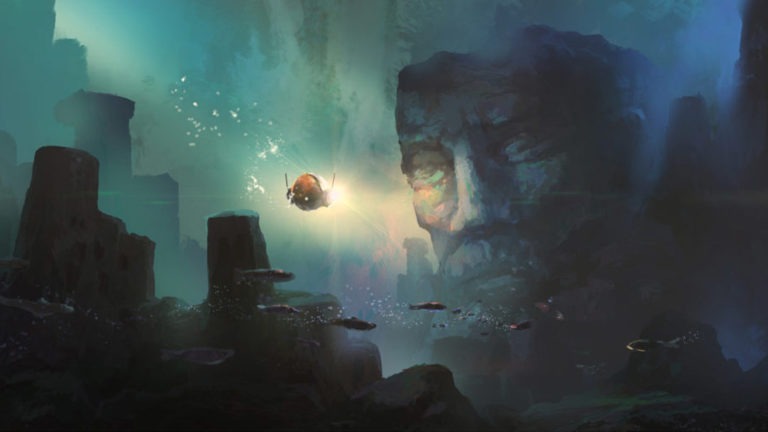
The mystery of the lost continent of Atlantis has puzzled researchers for centuries, as growing evidence supports the theory that an advanced civilization may have been destroyed and gone unnoticed by mainstream archeology. This antediluvian civilization is assumed to have been located somewhere in the Atlantic Ocean and is thought to have been the progenitor of ancient civilizations like those in Egypt and India. But could there have been another sunken continent from that era that predates Atlantis? The Yonaguni ruins might provide an answer.
The Yonaguni Monument
In 1985, a Japanese diver named Kihachiro Aratake was exploring the seafloor off the Southern shore of Yonaguni-Jima island, the Western-most island in the Ryukyu archipelago of Japan. Aratake came across what appeared to be the sunken ruins of an ancient, megalithic, stepped pyramid, similar to the ziggurats built in ancient Sumer. Since his discovery, the provenance of the ruins has been debated as to whether they are man-made or naturally occurring, due to the possibility of natural geological terracing.
Dr. Masaaki Kimura from the University of Ryukyu is the biggest proponent for the theory supporting the artificiality of the ruins. Surprisingly, Dr. Robert Schoch is one archeologist who has contended Kimura’s theory, despite his support for the Sphinx water erosion hypothesis. Although, Schoch has conceded that he doesn’t perceive Yonaguni to be a closed case and that he hasn’t spent as much time diving there, compared to Kimura’s 15 years.
According to Kimura, the Yonaguni monument appears to depict carvings of animals and people as well as the remnants of a carved face, which he compares to the Moai heads on Easter Island. At the end of the last ice age, Yonaguni would have been connected to what is now mainland China. It is likely that the fate of the civilization that built the Yonaguni pyramid, was sealed by a massive tectonic event that triggered a tsunami and subsequent sea level rise.
Since the end of the last Ice Age, sea levels have risen some 40 meters, causing drastic changes in topography and lending credibility to the theory that there may have been cities or even continents that disappeared into the sea. Based on stalactite found in caves near the ruins, Kimura has calculated the Yonaguni pyramid to be at least 6,000 years old when it sank, with the potential to be up to 10,000 years old including the time prior to flooding. The oldest recorded flooding event at Yonaguni occurred in the late 1700s, during which a tsunami ravaged the island with 130 foot waves. This combination of sea level rise and catastrophic climatic events were likely the cause of this ancient city’s demise.
Courtesy of www.yonaguni.ws
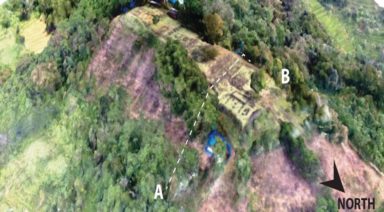
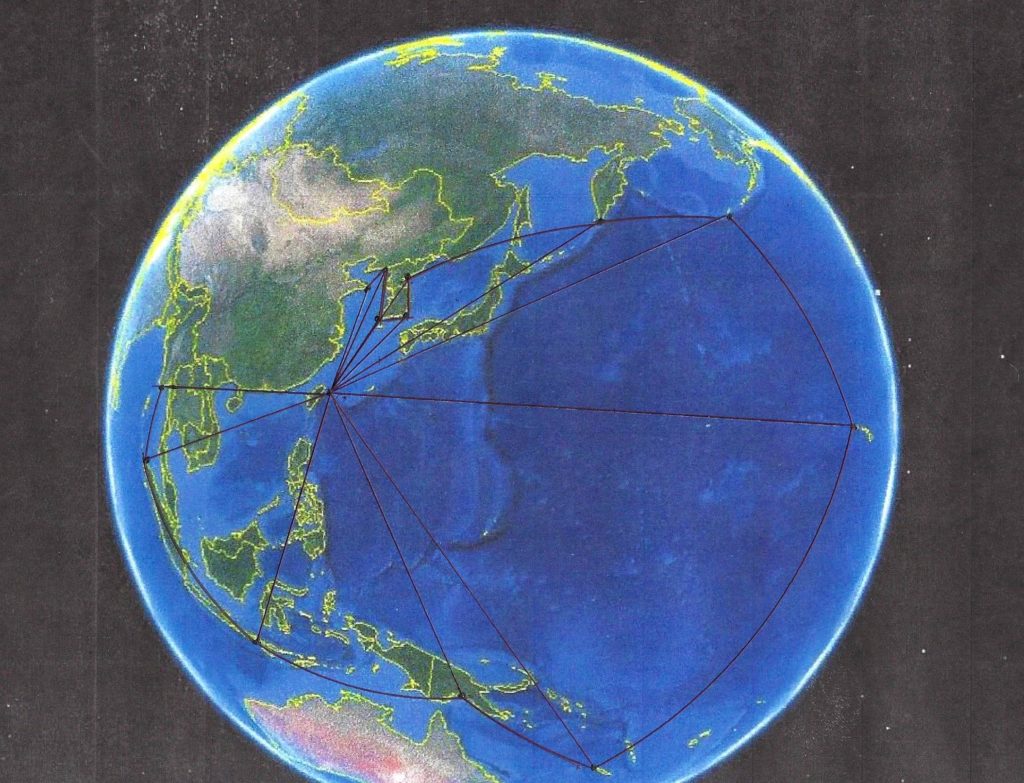
An interesting discovery has been made when looking at the orientation of the angles in the Yonaguni ruins. One researcher believes that the radial lines, when extended out from the ruins, might potentially outline a territory in the Pacific. This theory employs geoglyphology, or the study of coded maps and messaging in ancient geoglyphs, and has drawn out the radial lines of the Yonaguni ruins. The Faram Research Foundation’s work shows lines that depict a map very similar to the territory sought after by Japan during WWII.
The area extends from Yonaguni and the South China Sea, up to the tip of Alaska’s archipelago, down to Hawaii and back over encompassing Indonesia and Burma (Myanmar). This territory, some believe, could be that which was occupied by the lost continent of Mu, a lost civilization larger and older than Atlantis.
The Lost Continent of Mu
The lost civilization of Mu, is thought to have spanned a large swath of the Pacific Ocean. Reaching from the Philippines Sea all the way to Easter Island, Mu would have encompassed most of the small islands in the mid-Pacific, including Guam, Fiji, Christmas Island, Midway and Hawaii. The conception of Mu was first proposed by Augustus LePlongeon in the 19th century who was the first explorer to photographically document the ancient Mayan city of Chichen Itza. It was there that he supposedly learned of the lost continent of Mu through his translation of the ancient Mayan Troano Codex.
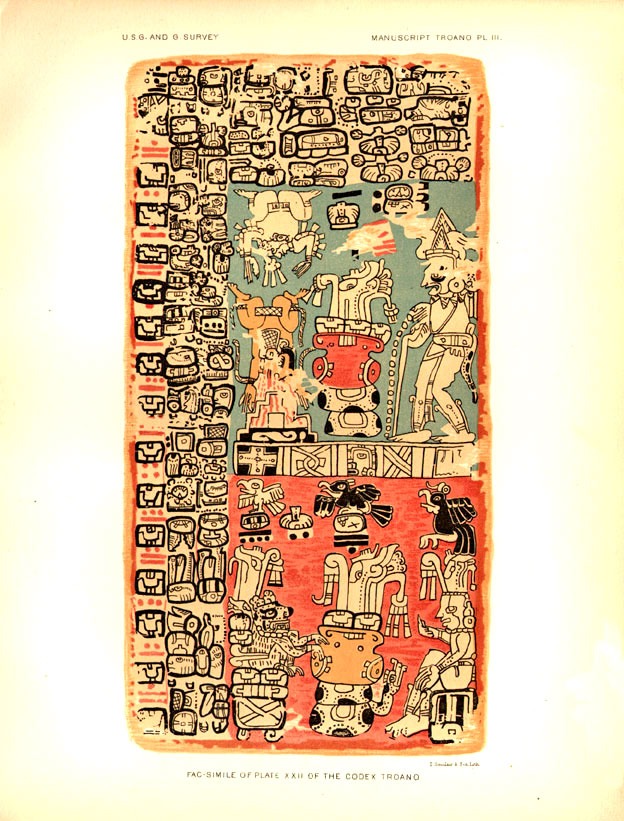
LePlongeon’s translation showed that the Mayan civilization was aware of and predated the ancient Egyptian and Greek civilizations, while also mentioning another civilization that was lost in a cataclysmic event. But LePlongeon’s account is thought to be spurious due his use of a false translation of the ancient Mayan language.
But a later account of the ancient continent from a book published in 1926, by James Churchward, is thought to possibly carry more veracity. Churchward was an English occultist who spent several decades living and studying with a group of mystic priests in India. There he was shown esoteric tablets that detailed the erstwhile civilization and its supposed 64 million inhabitants called the Nacaal, who lived roughly 50,000 years ago. The tablets contained a multitude of vignettes, or a series of pictographs that supposedly told the story of Mu. In order to properly transcribe the vignettes, Churchward had to study an ancient language called Naga-Maya, known to only a handful of people in the world.
Although it is difficult to conceive of a continent this size to have just disappeared underwater, some believe that the Yonaguni monument may be a key to the explanation. Though Churchward’s translation didn’t garner as much notoriety as the search for Atlantis, some believe his interpretation of Mu to be one in the same with the lost city of Lemuria, popularized by Russian theosophist, Helena Blavatsky. Blavatsky’s depiction of the Lemurian people shares many similarities with Churchward’s account, that she also claims to have learned from an esoteric text given to her by Indian mahatmas.
Were Lemuria and Mu one in the same, or two disparate, ancient civilizations that fostered the mysteriously advanced ancient cultures we’re aware of today. While we have been obsessed with the search for Atlantis, it appears that there could be evidence of an older society that may hold clues to the knowledge of our ancient ancestors. Could the Yonaguni ruins be the key to uncovering these antediluvian people?
About the Author

Sirians: Who Are They And What Is Their Connection To Earth

The Sirians are star beings from the Sirius system, one of the brightest stars in the sky and deeply symbolic in many ancient cultures. They are associated with a high spiritual frequency, ancestral wisdom, and a direct influence on humanity’s evolution. In this article, we explore who are the Sirians, where they come from, and how they are linked to Earth’s spiritual history.
Table of Contents
- Who Are The Sirians And Where Do They Come From?
- Spiritual And Energetic Characteristics Of The Sirians
- The Spiritual Mission Of The Sirians With Humanity
- Incarnated Sirians: How To Recognize Their Presence On Earth
- Relationship Between Sirians, Pleiadians, And Arcturians
- How To Connect With Sirian Energy
- How To Know If Your Soul Originates From Sirius
Who Are The Sirians And Where Do They Come From?
Sirians are beings of light from the Sirius star system, located in the Canis Major constellation. This star was seen as a spiritual reference point by ancient cultures like the Egyptians, Sumerians, and Mayans, who associated it with advanced knowledge and a direct connection to higher realms. The Sirians belong to a highly evolved civilization that has guided humanity since its beginnings, offering wisdom and assistance at key moments in human development.
These beings operate from elevated levels of consciousness and actively collaborate in the planet’s evolutionary process. They have transmitted essential knowledge about sacred geometry, vibrational healing, energy technologies, and the integration of body, mind, and spirit. Their presence is often felt through dreams, meditations, and intuitive experiences, guiding those in the process of spiritual awakening and reconnection with their cosmic origin.
In Gaia’s series Deep Space, researchers explain how beings from Sirius could be related to ancient civilizations on Earth, pointing to evidence in Egyptian hieroglyphics and the star charts of the Dogon tribe from West Africa.
Spiritual And Energetic Characteristics Of The Sirians
The Sirians possess very high vibrational qualities and are deeply connected with cosmic wisdom. Their energy manifests through harmony, spiritual knowledge, and the capacity for deep transformation. Below are some of their main characteristics:
- Connection with water: Their energy is linked to this element, symbolizing emotional flow and ancestral wisdom. They often connect with Earth through oceans, lakes, and dolphins.
- Advanced spiritual technology: They manage knowledge that integrates science and spirituality. They have developed technologies based on frequencies, crystals, and sacred geometry.
- Telepathic communication: They communicate through the mind and heart. Their language is vibrational and can be received during meditation or in expanded states of consciousness.
- Masters of sacred geometry: They use geometric forms to activate energetic portals and harmonize spaces. They teach how to apply them for personal and planetary balance.
- Vibration of service: Their main intention is to guide, heal, and collaborate with the beings’ evolution. They work from subtle planes to support collective awakening.
- Connection with ancient civilizations: They are linked to cultures such as Atlantis, Egypt, and Lemuria. Through them, they sowed fundamental knowledge for humanity.
- Subtle but constant presence: Although they are not always visible, their energy can be felt at key moments of transformation. They act as silent guides of spiritual awakening.
The Spiritual Mission Of The Sirians With Humanity
The mission of the Sirians is deeply tied to the awakening of consciousness on Earth. Their main purpose is to collaborate in the planet’s evolutionary process, driving inner transformation, energetic activation, and reconnection with the soul’s purpose. Through their guidance, many people have opened up to new forms of understanding existence, energy, and the origin of being.
The Sirians act as guardians of universal wisdom, transmitting knowledge that helps reestablish balance between rational mind and intuition. They have influenced the development of advanced civilizations and the energetic configuration of sacred sites. Their presence has been key during planetary transitions, offering tools to face the challenges of change from a place of alignment and clarity.
Moreover, they foster the union between the spiritual and the material, encouraging a life of greater awareness, coherence, and responsibility. Their mission also includes the strengthening of collaboration networks among like-minded souls, the promotion of new forms of education, and the integration of ancestral knowledge into daily life. Through their guidance, they aim to ease the path toward a more awakened humanity, connected to its essence and aligned with the evolutionary cycles of the universe.
Incarnated Sirians: How To Recognize Their Presence On Earth
Many beings from Sirius have incarnated in human bodies to directly support collective transformation from the physical plane. Although they are not always aware of their origin, their energy and purpose are clearly reflected in their actions, interests, and perception of reality.
- Heightened energetic sensitivity: They easily perceive the vibrations of people and environments. They tend to need calm spaces to remain balanced.
- Deep interest in spirituality and the ancient world: From an early age, they are drawn to topics like sacred geometry, ancestral civilizations, and the mysteries of the universe. This attraction often intensifies during personal crises or times of inner searching.
- Sense of not belonging: They often feel that Earth is not their true home. This feeling is accompanied by a strong need to understand their purpose in this life.
- Natural healing ability: Many develop skills in energy therapies, meditation, or practices related to mind-body balance. Their presence has a harmonizing effect on others.
- Commitment to service: They have an inner drive to help, teach, or guide others. Their mission is oriented toward raising collective consciousness and building a more coherent and loving world.
Relationship Between Sirians, Pleiadians, And Arcturians
The Sirians, Pleiadians, and Arcturians are part of a network of star civilizations that actively collaborate in the evolutionary process of humanity. Each of these races contributes a unique frequency and complementary knowledge that together support the awakening of collective consciousness on Earth. This interstellar cooperation is not recent; it dates back to the origins of our spiritual history.
The Pleiadians, for example, work with the energy of unconditional love, emotional healing, and energetic body alignment. The Arcturians bring advanced spiritual technology, wisdom in frequency management, and guidance for developing multidimensional consciousness. The Sirians, meanwhile, serve as bridges between these frequencies, offering structure, cosmic vision, and connection to ancestral knowledge.
Although each group has its own mission, their energies do not compete with each other but integrate harmoniously. Many souls incarnated on Earth have ties to more than one of these civilizations and may feel affinity or connection with their different teachings. Recognizing this support network is key to understanding the depth of the process humanity is currently undergoing.
How To Connect With Sirian Energy
Connecting with Sirian energy requires openness, clear intention, and a willingness to work from subtle planes. Their frequency can be perceived in moments of deep silence, during spiritual practices, or through intuitive experiences. Here are some effective ways to establish this connection:
- Meditation in water: Meditating near the ocean, rivers, or in salt baths helps tune into their vibration. Water is a natural channel for their frequency.
- Working with sacred geometry: Drawing, visualizing, or meditating with shapes like the star tetrahedron or Metatron’s Cube facilitates connection. These forms act as energetic keys.
- High-frequency sounds: Listening to isochronic tones or frequencies associated with Sirius, such as 963 Hz, helps open channels of subtle perception. These sounds raise vibration and attune the energy field.
- Intuitive writing: Practicing automatic writing in a meditative state allows symbolic messages or images to emerge. It’s a common communication path with Sirian guides.
- Conscious invocation: Before sleep or during meditation, you can directly ask for guidance from Sirian beings. A clear and respectful intention is enough to open the channel.
How To Know If Your Soul Originates From Sirius
Many people feel a deep connection to the stars without knowing exactly where it comes from. When a soul originates from Sirius, internal signs often emerge, such as a strong attraction to the cosmos, a sense of spiritual mission, and a special sensitivity to subtle energies. These signs arise naturally throughout life, especially during transformative moments.
It is also common to experience a sensation of not belonging or nostalgia for a place that can’t be identified on Earth. People with Sirian origins often have a deep perception of reality, a need to understand the purpose of existence, and a drive to transform their surroundings through service, teaching, or healing.
Consulting with an Akashic Records reader is a powerful way to explore your soul’s journey and possible star origin. A reading with an Akashic Records practitioner can help you understand if your soul has ties to Sirius and what purpose it carries for this incarnation. Recognizing your spiritual lineage not only brings clarity, but also strengthens your connection to the path you came to walk on Earth.